Executive Risk SolutionsQuarterly Update | October 2026
Oct 27, 2026
Following a transaction that took Zayo Group private and resulted in shareholders receiving $35 per share, litigation was brought by former shareholders alleging the company’s CEO breached his fiduciary duties by taking actions for personal reasons that lowered the deal price. Shareholders primarily relied on a conversation the CEO had with a potential bidder that indicated a willingness to pay more than the $35 per share eventually agreed to. The litigation eventually settled, with an agreement to pay shareholders an additional $27,125,000.
Zayo then sought to have the settlement funded by its directors and officers liability (D&O) insurance. The D&O insurers refused to cover the settlement, and this case was commenced challenging the denial of coverage. In denying coverage, insurers relied on the “Bump-Up Clause”, which excluded coverage for any settlement that represented an effective increase in consideration related to an acquisition. Zayo argued that shareholders were not seeking damages for inadequate consideration, rendering the exclusion inapplicable.
The Delaware Superior Court disagreed with Zayo, holding that the settlement was effectively additional merger consideration rather than a payment to avoid the risk of ongoing litigation.
The Court arrived at this conclusion by focusing on (1) the conduct of the CEO that depressed the deal price, and (2) the fact that settlement proceeds were paid on a per-share basis to shareholders who received an inadequate price for stock they held at closing.
The Court explained its reasoning as follows. “There are strong indicators that the Settlement represented compensation for an inadequate deal price. [The CEO] paid the allegedly injured shareholders on a per-share basis and only to those who held stock at closing and therefore received consideration from the Acquisition. The Settlement also occurred after about a year of discovery, and the shareholders obtained and reviewed over 16,000 documents from [the CEO] and third parties before settling – supporting the notion that the Settlement represents an increase in consideration and not mere litigation avoidance.” Zayo Group Holdings, Inc. v. National Union Fire Insurance Co., 2026 WL 2254784 (Del. Super. August 5, 2026).
This case presented the question of whether coverage should be provided for a Derivative Complaint filed after a Section 220 Books and Records Demand had been made during a prior policy period. The primary D&O insurer sought to deny coverage for the derivative lawsuit, arguing that it was related to the 220 Demand which, it should be noted, was made but never reported under the prior policy period. Because the two matters were related, the insurer argued they should be treated as one single claim made on the earliest filing date, based on the policy’s “Retention” clause. As such, the derivative action should be deemed made during the prior policy period and therefore excluded under the current policy. Plaintiffs in this case did not dispute the related nature of the two matters, but argued that the current policy’s related-claims exclusion only applied when the earlier matter was reported under a prior policy, which did not happen here.
In upholding coverage for the derivative lawsuit, the Delaware Superior Court found the insurer’s arguments unpersuasive. “Even if a Claim relates back to a prior matter, that does not mean the Claim must be deemed made at the time of the prior matter for coverage purposes…Here, the Renewal Policy does not direct exclusion for unreported related claims.”
The Court found the insurer’s reliance on the “Retention” section and “deemer” clause therein to be unreasonable. The Court found the clause to be exclusionary in nature, placing the burden on the insurer to prove its applicability. In finding that the insurer failed to meet that burden, the Court held “the Related Claims Exclusion applies only to prior reported claims.”
Given the amount of confusion and litigation surrounding policy language dealing with “related claims”, it would not be surprising to see this decision appealed. While we always welcome courts finding in favor of policyholders and coverage, this decision is unfortunately an outlier. Big V Capital LLC, et. al. v. Great American Insurance Co., 2026 WL 2110883 (Del. Super June 30, 2026).
The Eighth Circuit Court of Appeals recently rejected a Receiver’s attempt to obtain D&O policy proceeds, based on the manner in which he attempted to do so. The background facts involve a company defaulting on loans and being put into receivership. The receiver subsequently sent two letters directly to the company’s D&O insurer alleging misconduct by the officers and demanding policy proceeds. After the insurer failed to respond or pay its limit, this case was filed.
The complaint was dismissed at the trial court level and leave to file an amended complaint was denied. While the district court found the receiver had standing to bring the claims, it held the demands failed to trigger coverage under the policy. “[T]he Policy requires a Claim to be a written demand against the insured (Empirical Prime) and [the receiver’s] letters were, at best, demands against the insurer.” In essence, the receiver never established a legal obligation to pay by going straight to the insurer, as opposed to pursuing claims against the directors and officers first. “[T]here are no allegations in the complaint that any demand was made against Empirical, the Insured.
As such, [the receiver] fails to plausibly allege that the letters to [the insurer] can constitute a Claim. And, even assuming, as the district court did, that [the receiver] could identify a Claim in terms of the underlying receivership action, he did not plausibly allege a Loss under the Policy as the complaint contains no allegations that this action has resulted in any legal obligation to pay resulting from a Claim. Because a legal obligation to pay is a requisite for a Loss under the policy, the absence of any allegation to this effect defeats any Claim of Loss.”
We highlight this case because even when a D&O policy should respond on behalf of its policyholders, the process by which claims are pursued is important. In failing to make a Claim against the directors and officers directly, the receiver was unable to obtain policy proceeds his client was likely entitled to. Once again, a reminder that policy language matters and failing to follow the proper procedures can jeopardize coverage. Brent King, Receiver v. Texas Insurance Co., 185 F.4th 798 (8th Cir. July 30, 2026).
This case involves three executives who signed personal guarantees in conjunction with two separate loans taken out on behalf of their employer. On the first loan, they simply signed as “Guarantors”, while on the second, the signature line specified “Personal Guaranty”. As one might expect given that you are reading about it here, the company defaulted on the loans and the executives turned to their D&O insurance to cover defense costs when the banks sought to collect from the executives individually.
In response to the request for coverage, the D&O insurer denied coverage and initiated a declaratory judgment action to confirm that no coverage was available. The trial court found in favor of the insurer, holding that the guarantees were executed by the executives in a personal capacity rather than any executive or official capacity at their employer. On appeal, the Eighth Circuit Court of Appeals agreed, affirming the lack of coverage. “Here, the Guaranty Agreement and the Personal Guaranty both manifest Appellants’ intent to assume personal liability. Neither document includes any reference to Appellants’ corporate designations on their signature lines. Nor does either document indicate in any other way that Appellants signed as executives of [the insured company]…Moreover, construing Appellants to have signed the guaranties in their executive capacities would render those guaranties meaningless.”
This case highlights an important aspect of D&O coverage not everyone is aware of. Coverage only exists for directors and officers for conduct undertaken in their official capacity. The policy at issue here required the conduct in question to be “solely” within their capacity as executives. Because the loans were signed in a personal capacity, coverage under the D&O policy did not attach.
It should be noted that a skilled and knowledgeable broker should have been able to remove the word “solely” from the policy, which would have increased the likelihood of coverage for the executives. Working with a broker that understands these nuances and knows how to modify a policy to provide best-in-class coverage in the marketplace will oftentimes mean a different (better) result when faced with an insurer seeking to deny coverage. The Hanover Insurance Co. v. James Larson, et. al., 2026 WL 2295457 (8th Cir., August 10, 2026)
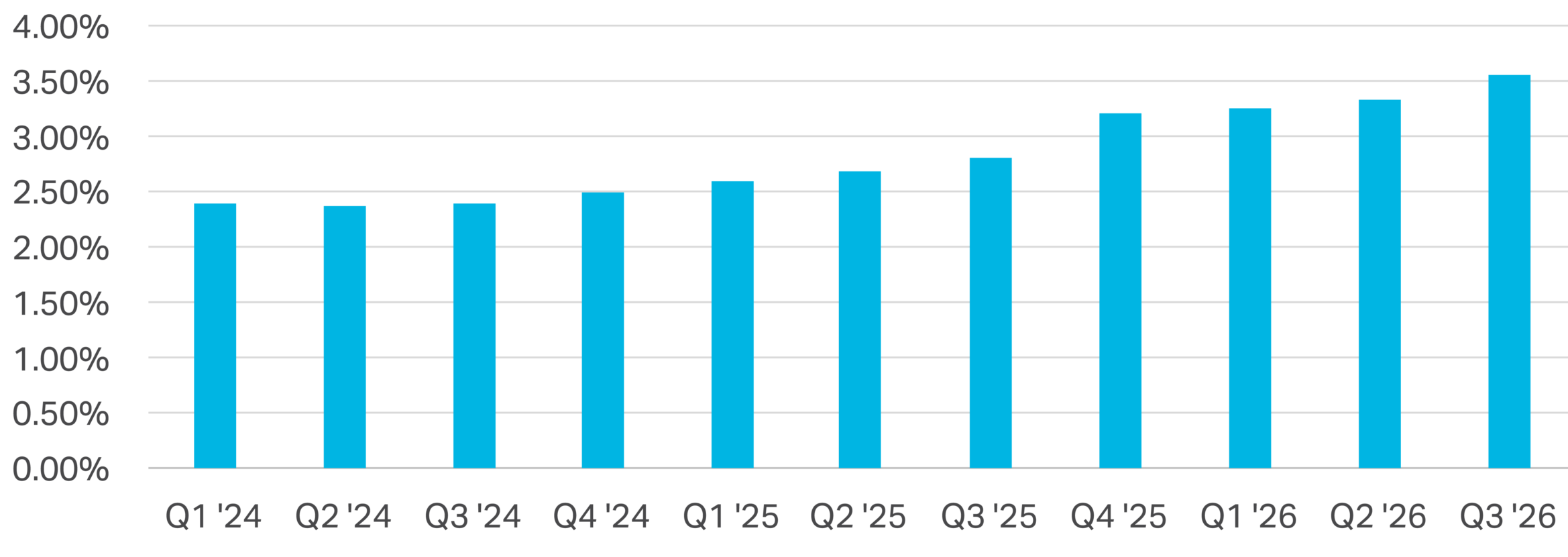
The U.S. transactional liability market continues to firm in 2026, driven by increased claims activity and a series of selective capacity withdrawals. That said, it thankfully remains far from being a true hard market.
Recent changes include the exits of The Hartford, Volante, Everest, Berkley Specialty London and QBE domestically in the U.S., the integration of Themis into Ryan, and a modest reduction in Euclid’s maximum limit participation. Despite these developments, overall market capacity remains substantial, though fewer carriers are willing to deploy large limits as aggressively as the pricing levels seen during 2023 and 2024.
At the same time, new entrants and expanded platforms are helping offset the contraction, including Arch Insurance North America’s launch of a direct U.S. transactional liability underwriting team in July 2026 and Distinguished Programs’ February 2026 launch of its Starr-backed transactional risk platform. Additional capacity has also emerged through Acquinex, supported by Lloyd’s syndicates and Accelerant Underwriting Managers, reinforcing that this remains a firming but highly competitive market rather than one experiencing a broad-based capacity shortage.
If anyone has questions or would like more insight on the recent changes, please feel free to reach out to any member of the IMA Transactional Liability team.
Brian R. Bovasso
Executive Vice President &
Managing Director
IMA Executive Risk Solutions
303.615.7449
brian.bovasso@imacorp.com
Travis T. Murtha
Director of ERS Claims
IMA Executive Risk Solutions
Legal & Claims Practice
303.615.7587
travis.murtha@imacorp.com
Justin M. Leinwand
Product Leader
IMA Executive Risk Solutions
303.615.7773
justin.leinwand@imacorp.com
Daniel Posnick
Transactional Liability Leader
IMA Executive Risk Solutions
303.615.7747
daniel.posnick@imacorp.com
 When Machines Make Decisions:Emerging Liability Exposures in Chemical Manufacturing
Sep 11, 2026
 Product Recall Response Plan
Aug 25, 2026
 The Growing Risk of Online Tracking Technologies
Aug 17, 2026
 The FDA’s Resumption of Public Release of Complete Response LettersWhat It Means for Life Sciences Companies and D&O Liability
Jul 31, 2026