Less Risk, More RewardCaptive Strategies for People-Driven Companies
Nov 4, 2025
In the ever-evolving landscape of healthcare, businesses are continuously seeking effective ways to manage and mitigate the risks associated with providing health benefits to their employees. One powerful tool that has gained significant traction with smaller to medium size employers in recent years is the medical stop loss captive. This white paper explores how this approach can contribute to a more sustainable and controlled healthcare cost management strategy.
Captive insurance has long been recognized as a powerful tool for employers seeking cost control and risk stability. However, traditional large captives often fail to meet the needs of smaller, tightly aligned employer groups with shared business goals. IMA’s Captive Practice specializes in designing and managing smaller, highly cohesive captives, offering employers a strategic path to enhanced cost predictability, governance flexibility, and long-term financial gains. This white paper explores how IMA’s customized approach to smaller captives is reshaping the industry by prioritizing employer alignment, operational transparency, and proactive risk management.
In 2025, medical plan cost trends are projected to increase by 8% and 11.4% for prescription drugs.
In 2025, medical plan cost trends are projected to increase by 8% and 11.4% for prescription drugs, both are an increase from 2024. There are a number of factors driving these increases—medical price inflation, consolidation and private equity ownership in healthcare, rising rates of chronic conditions, high-cost treatments due to advances in new treatments, and more effective and expensive new drug therapies replacing less costly alternatives for individuals with chronic conditions like diabetes and GLP- 1s that treat it.1
Employers looking to address these issues are generally divided by size. In 2023, larger employers saw an increase in their average health benefit cost per employee that was almost half the increase as smaller employers—7.8% vs 4.2%. In addition, historically stable plans like HMOs saw an average increase of nearly 20% for smaller employers.2 A typical response to address this rising cost by small to medium size employers has been to dilute coverage for members or market to different insurance carriers with a greater frequency. Those approaches are not strategic and wind up causing disruption to employees and disincentivizing engagement in high value care to manage or prevent chronic and costly conditions.
Larger employers on the other hand have more significantly embraced the strategy of unbundled self- funding for their employee healthcare coverage and untethering themselves from the traditional carrier based, fully insured product offerings. In doing so, they create customized employee health benefits by utilizing specialized vendors to manage individual components of their health plan administration while purchasing stop- loss insurance coverage for protection against larger claims.
Smaller to medium size employers often avoid this approach for several reasons—a lack of understanding or exposure (or collaborating with a consultant who is not well versed in the strategy), perceived administrative complexity, and the cost uncertainty associated with providing protection from catastrophic level claims and the impact on insurance premiums. Employers are not wrong in worrying about large, catastrophic claims. From 2020 to 2023 the frequency of million-dollar claims per million covered employees increased by 50%.3 The severity of claims has primarily been driven by advances in medical treatments and medications.
Individuals facing life altering or threatening conditions now have more options for treatment that ever before but the cost to deliver this care is growing exponentially. Employers are wise to consider the cost impact of these treatments on their plans.
Unlike broad-based captives, which often pool employers with differing financial objectives and risk tolerances, IMA’s employer-aligned captives bring together organizations with a shared philosophy, similar risk profiles, and aligned benefit goals.
This structure results in:
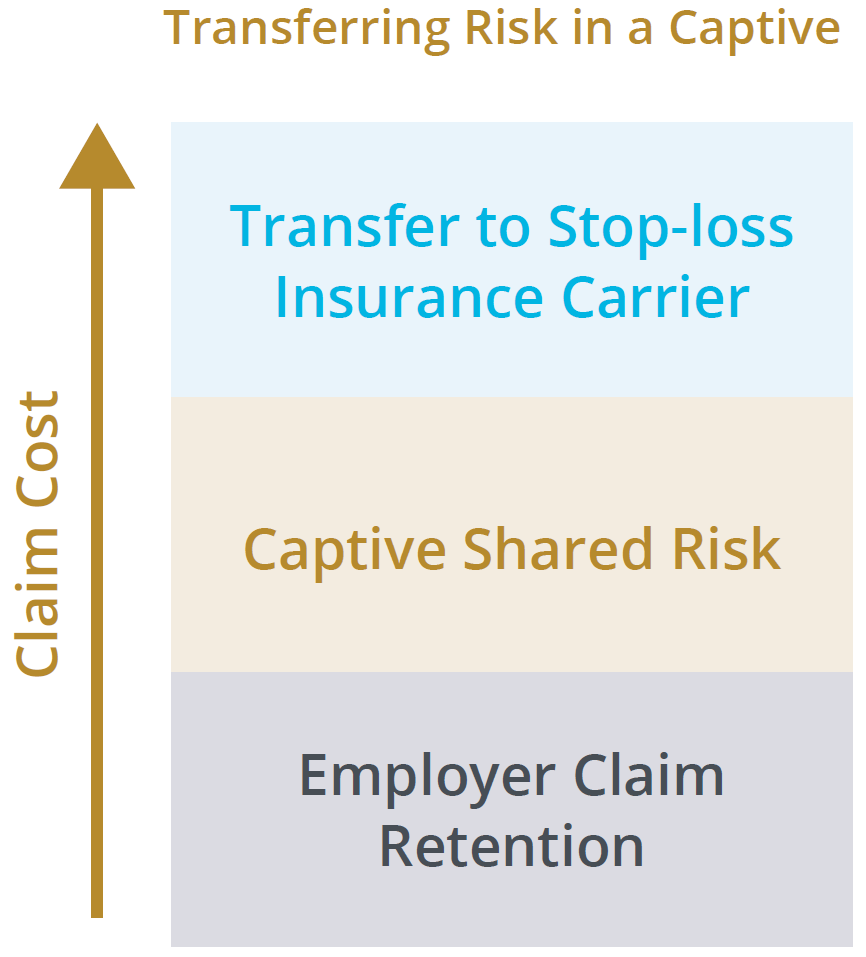
A medical stop-loss captive is an alternative-risk financing structure that allows individual participating companies the ability to share in the funding of high- cost medical claims. The goal of any alternative- risk financing arrangement is to find the appropriate level of balance between risk retention and risk transfer. Smaller and medium size employers within a captive seek to distance themselves from the reliance on the more cyclical and volatile standard insurance market. By spreading large claim risk financing over multiple employers, any single employer does not bear the full weight of an adverse loss year. In addition, in positive loss years, any surplus funds in the captive are retained and distributed to participating member companies—eliminating profit retention usually held by insurance carriers.
While joining a captive can optimize insurance financing for a company’s health plan, the development of an effective risk mitigation strategy is paramount for the employer. Employers within a captive control their health plan operations – including the selection of third-party administrators, pharmacy benefit manager, medical network, and cost share provisions with employees (copays, deductibles, and out of pocket maximums). This precision alignment of specific vendors allows employers to build a health plan that is unique to their organizational objectives and population needs.
The most successful of health plan programs contain key elements:
IMA’s Captive Practice, in partnership with Cornerstone Risk Solutions’ program management expertise, provides a seamless experience for employers seeking to establish and manage captives. From prefeasibility assessments and actuarial-driven loss projections to ongoing governance and risk management, IMA offers end-to-end captive consulting and administration to ensure each captive is structured for long-term financial success and stability.
Our team is comprised of experienced individuals with deep knowledge of self- funding within captives. We specialize in the placement of individual employers within existing captives and the creation and management of homogenous, member owned captives. Whether partnering with a prospective client or developing strategy for an existing client, our collaborative approach allows us to work closely with employers to understand their unique needs to ensure captive placement and developed solutions are tailored and effective.
A successful captive insurance strategy requires more than just financial structuring—it demands expert oversight in medical plan administration, pharmacy management, and health risk management to ensure cost containment and long-term sustainability.
At IMA, our Captive Practice collaborates with internal subject matter experts across multiple disciplines to provide a comprehensive, end-to-end approach to captive management:
We have helped hundreds of employers develop a comprehensive, self-funded strategy aligning with a medical stop-loss captive. These programs have the potential for significant level of savings and the establishment of improved and sustainable health plans.
The following results reflect real-world impact from employer groups that have implemented IMA’s captive insurance strategies. While every organization’s financial and risk profile is unique, these data points highlight the consistent trends and measurable improvements seen by businesses across industries. These results are not isolated but instead represent what organizations can achieve when leveraging a well-structured, employer-aligned captive with IMA’s expertise.
If your organization is ready to take control of healthcare costs with a strategically designed captive insurance program, IMA’s Captive Practice is here to help. Contact our team today for a customized feasibility assessment and discover how an IMA-led captive can transform your benefits strategy.