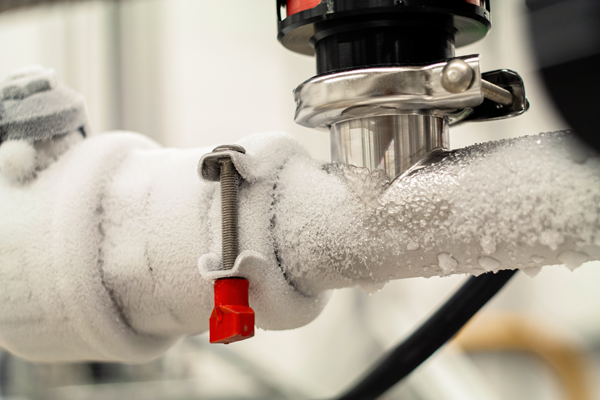
Freezing temperatures can cause significant issues within commercial and/or residential facilities resulting in power outages, frozen pipes, burst pipes and significant property damage. Even a minor freeze up can interrupt production, cause disruption to operations and prove costly. Prior, proper planning can reduce the likelihood of freeze up of domestic water piping, sprinkler piping, process water or roof drains, causing considerable damage to your building.
Prior to Incoming Cold Weather:
- Designate a person to monitor the weather utilizing a national weather service.
- Make sure portable heaters are in good working condition with fuel and operational.
- Ensure that any temperature monitoring device is working properly.
- Evaluate your building envelope to determine if there are any “exposed” piping to outside weather conditions.
- Close all openings including doors, windows, and roll up doors. Check susceptible areas with an external thermometer to ensure the area will maintain a temperature of 40 40°F areas that have dampers within piping passing through.
- Monitor temperatures in the building at specific locations, sprinkler system supplies, stairwells with outside doors, to determine if they are considerably colder than adjacent areas. Make changes as necessary to supply to the areas.
- Locate any concealed spaces, above ceiling tiles, below floors, crawl spaces that may have susceptible piping to freezing temperatures. Determine if it is possible to provide temporary opening to the area so heat can penetrate and help avoid freezing.
- Take a moment to evaluate building insulation and piping insulation. Replacing damaged or missing insulation prior to the freeze event happening.
- Evaluate the need for heat tracing for important equipment with piping to and from, or instrumentation that is water filled.
- Determine if hoses have been attached to outside hose bibs, remove the hose to elevate pressure from the hose bib. Depending on the type of hose bib or outside faucet, once the pressure is relieved, water should flow back into a wall. Placing an insulation device on the hose bib helps to ensure that any trapped water likely will not freeze.
- Provide adequate access to all water shutoff valves including the main shutoff. Review emergency procedures on how to shut the water off with security and emergency team, including domestic water pumps in the event of an emergency.
Cold Weather Event:
- Specifically monitor the temperature in the hard to heat locations. Continue to monitor to ensure the temperature doesn’t drop below 40 degrees. These areas should be monitored during off hours alarming or providing notification at or just below 40 degrees.
- Determine if any operations or procedures need to utilize steam or water supply. If heat is lost, institute emergency response to shut down the operations safely and effectively.
- If heat is lost throughout the building, periodically open the faucets in the building to run water, continue with a drip, but if freeze is imminent drain the domestic water lines, secure the building, and notify the emergency response team.
- If pipes do freeze, utilize methods to heat pipes without using an open flame or a torch. Is safe to do, keep the shutoff valves closed and slowly open to investigate where leaks are present.
- Consider limiting operations until the sprinkler system is fully recharged if it was drained or needs repairs due to leaks in the system.
 The Evolving Ergonomic Landscape of Remote and Hybrid Work
Feb 10, 2026
The Evolving Ergonomic Landscape of Remote and Hybrid Work
Feb 10, 2026
 Winter – Frozen Pipes – Water DamageA Key Driver of Property Incidents
Dec 31, 2025
Winter – Frozen Pipes – Water DamageA Key Driver of Property Incidents
Dec 31, 2025
 The Benefits of Salt-Sand Mixes and Colored Ice Melts
Dec 31, 2025
The Benefits of Salt-Sand Mixes and Colored Ice Melts
Dec 31, 2025
 Inclement Weather Alert Employee Communication Checklist
Dec 31, 2025
Inclement Weather Alert Employee Communication Checklist
Dec 31, 2025